Technical Insights
Deep dives into high-speed simulation, signal integrity and simulation–measurement correlation.
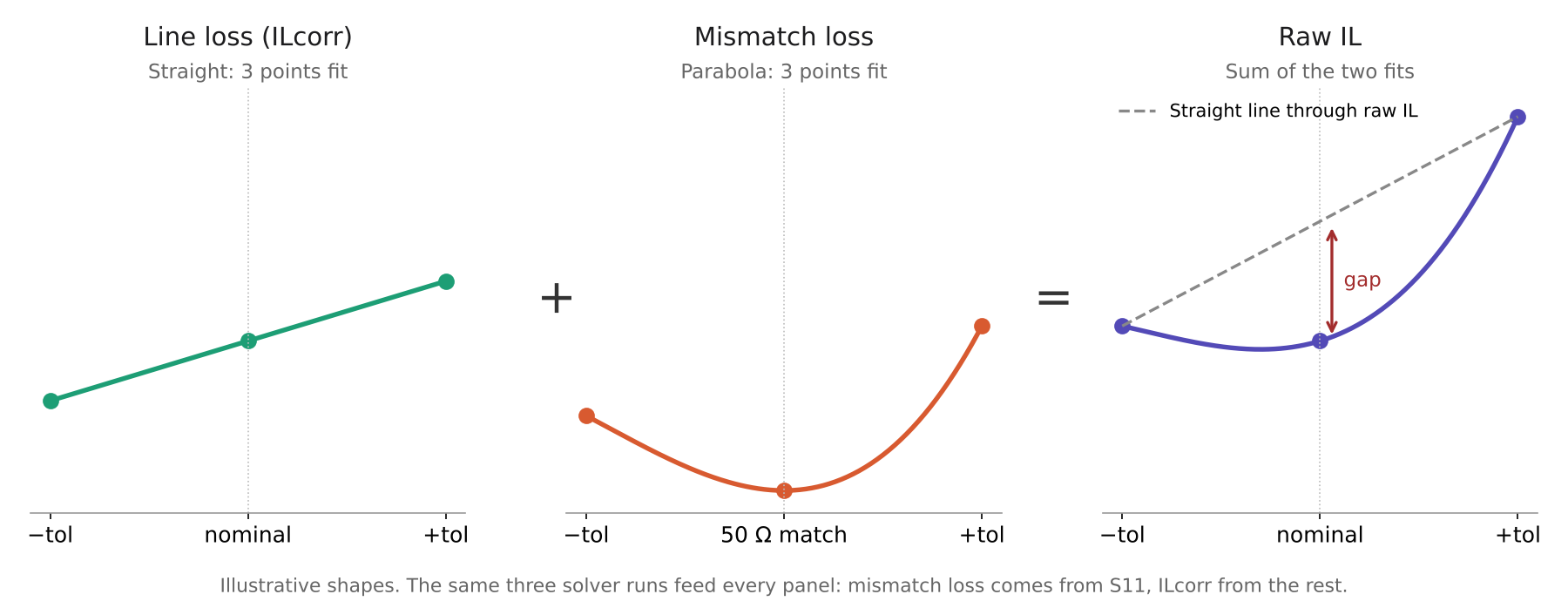
How Much Data Is Enough? Part B: Predicting Where the Response Curves
Part A found the extra points by adding them until the result stopped moving. Part B predicts where they go before solving: not where the response is steep, but where it curves, at the 50 Ω match across inputs and at ripples and via-stub notches across frequency. Tolerance then sets how many.
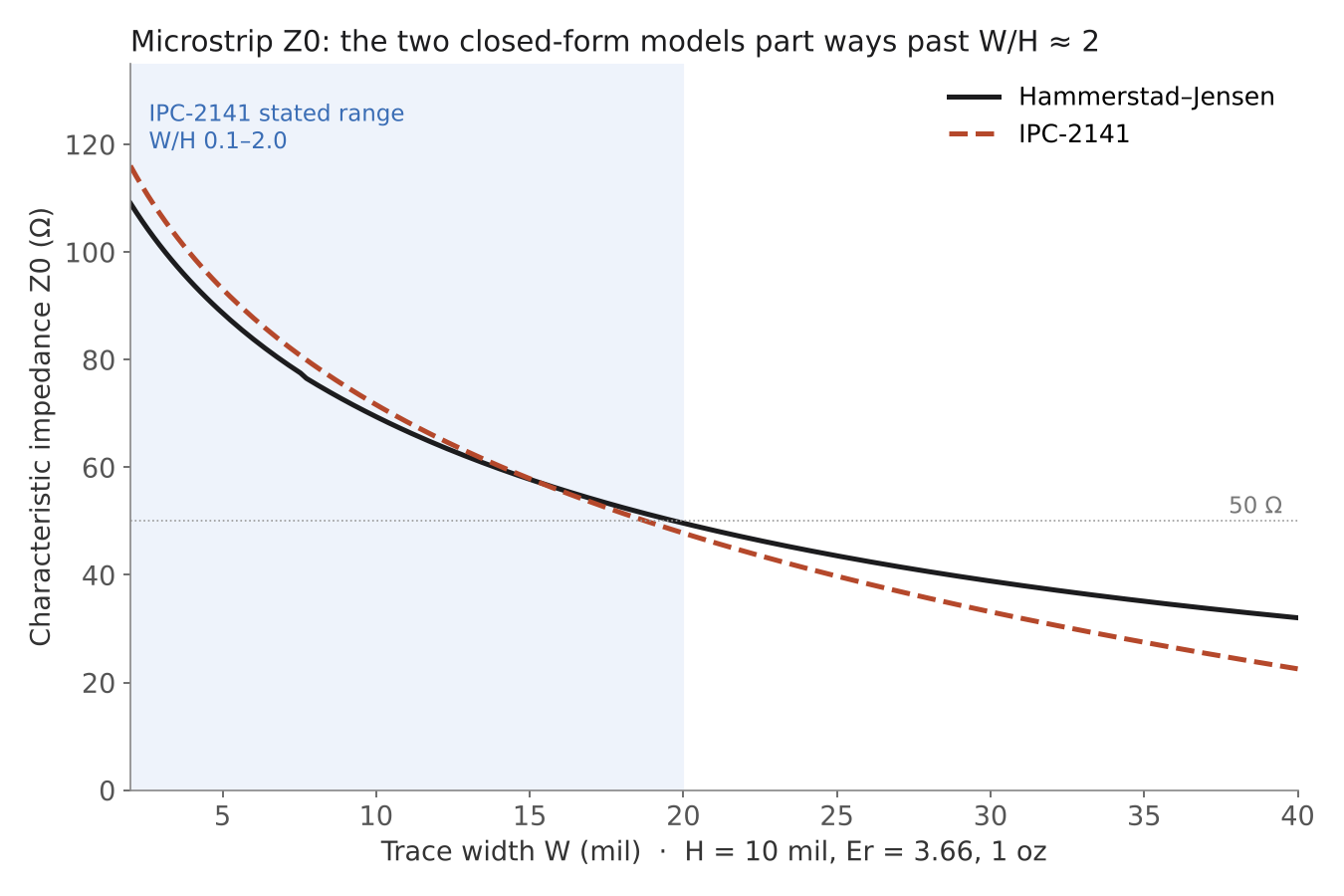
Using Analytical Formulas for High-Speed Interconnects: Sources, Validity and Considerations
The standard analytical formulas for microstrip, stripline, coplanar waveguide, loss, vias and channels, with their sources and valid ranges, and six considerations that decide whether an answer can be trusted. A simplified CPW fit alone can be 14–28% off.
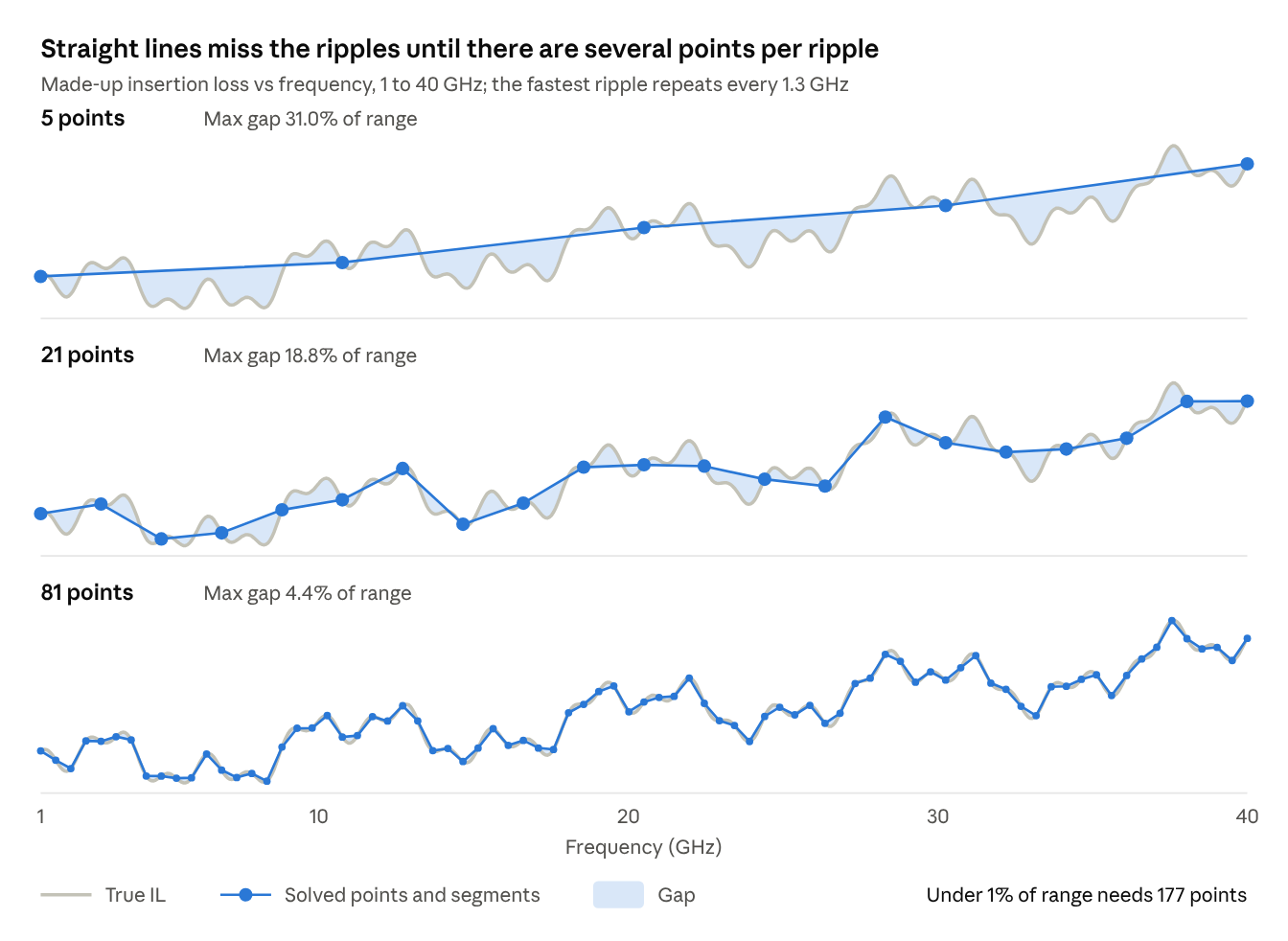
How Much Data Is Enough? Part A: An Insertion-Loss Sensitivity Study
Three solved points per input are enough for reflection-removed insertion loss, with interpolation gaps under 0.6%. Raw IL needs up to seven for substrate height. We derive the rule from the second derivative and link it to uncertainty quantification.
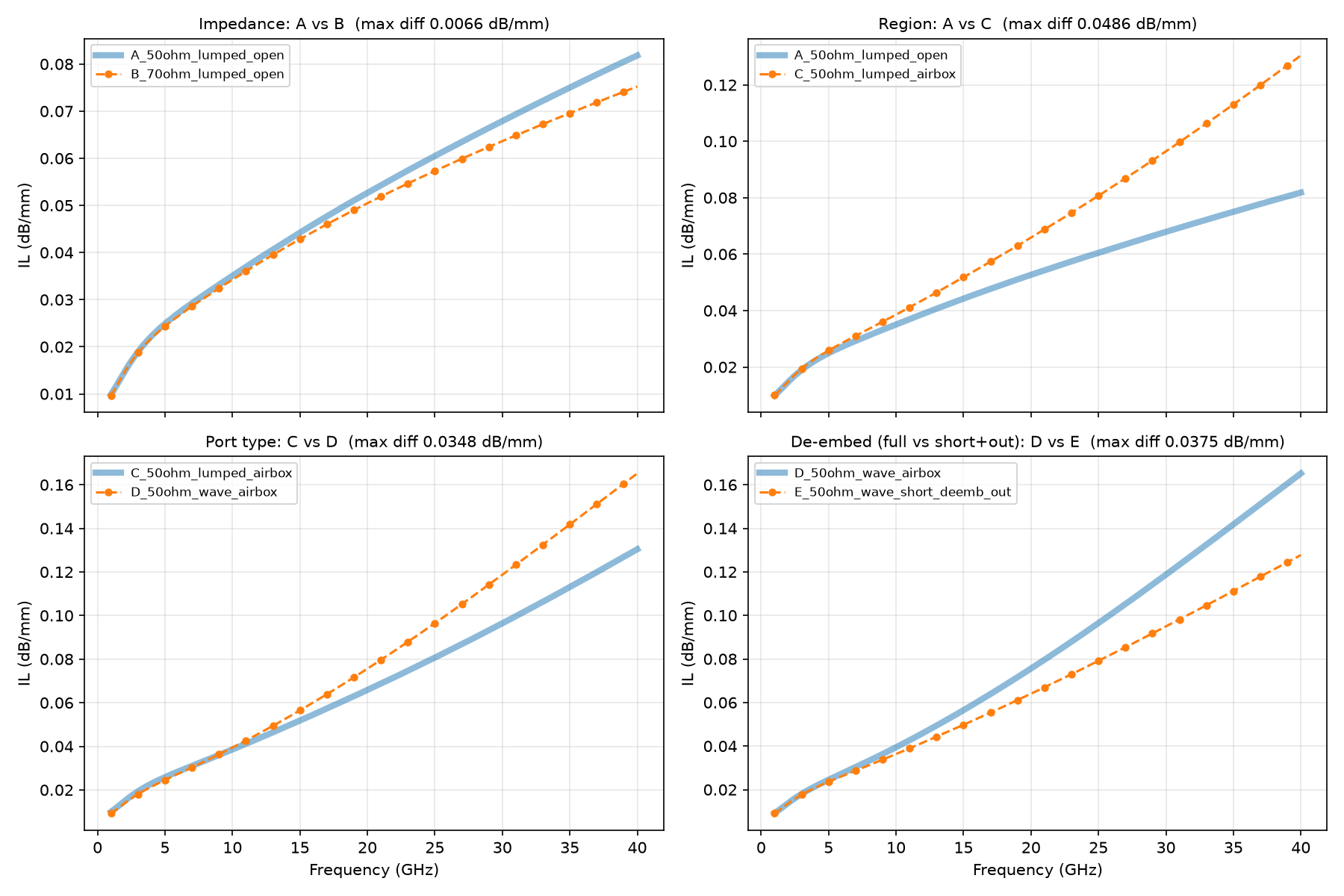
Simulation–Measurement Correlation in High-Frequency Planar Structures: Why They Disagree and How the Gap Is Closed
Published simulation–measurement gaps of 2–8% are routine. We trace every discrepancy to three origins, group the remedies into five schools of thought, and show that solver setup alone changes microstrip insertion loss by 2.2× at 40 GHz.